
Choosing the right home is no longer just about location or price—it’s about lifestyle. One of the most common dilemmas homebuyers face today is deciding between Traditional vs Modern Residential Communities in Gurgaon. Each offers a distinct living experience shaped by culture, design, social structure, and amenities. Understanding these differences can help you choose a community that truly aligns with your values, daily habits, and long-term goals.
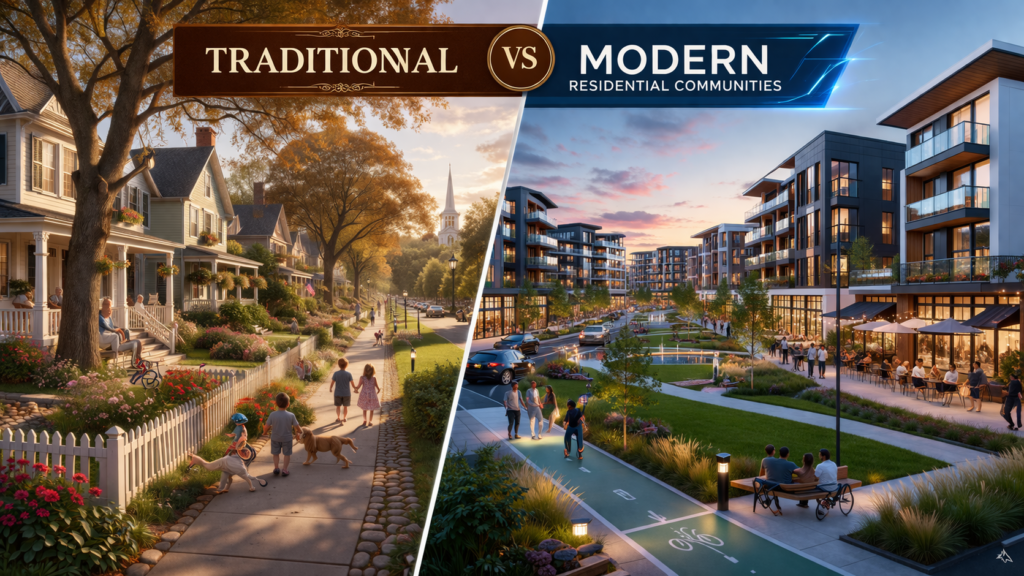
What Are Traditional Residential Communities?
Traditional residential communities are deeply rooted in long-standing cultural practices and social values. These neighborhoods are often found in older city areas, towns, or semi-urban regions and are known for their close-knit social environment.
Key Features of Traditional Communities
- Strong social bonds: Neighbors often know each other personally, fostering trust and emotional connections.
- Cultural continuity: Festivals, rituals, and customs are actively celebrated together.
- Conventional home designs: Homes focus on functionality, with courtyards, verandas, and natural ventilation.
- Limited amenities: Facilities such as parks, gyms, or clubhouses are minimal or shared informally.
- Slower pace of life: Ideal for families seeking emotional security and community support.
Traditional residential communities are best suited for people who value relationships, heritage, and a sense of belonging over luxury and modern convenience.
What Are Modern Residential Communities?
Modern residential communities are designed for contemporary lifestyles, especially in metropolitan and rapidly developing urban areas. These communities emphasize comfort, security, and convenience through planned infrastructure and advanced amenities.
Key Features of Modern Communities
- Gated and secure living: CCTV surveillance, access control, and professional security services.
- World-class amenities: Clubhouses, swimming pools, fitness centers, jogging tracks, and landscaped gardens.
- Smart home features: Automation, energy-efficient systems, and high-speed connectivity.
- Professional maintenance: Dedicated facility management ensures hassle-free living.
- Privacy-focused lifestyle: Residents enjoy independence with minimal social obligations.
Modern residential communities are ideal for working professionals, nuclear families, and individuals who prioritize efficiency, comfort, and premium living standards.
Traditional vs Modern Residential Communities: A Detailed Comparison
Lifestyle and Social Interaction
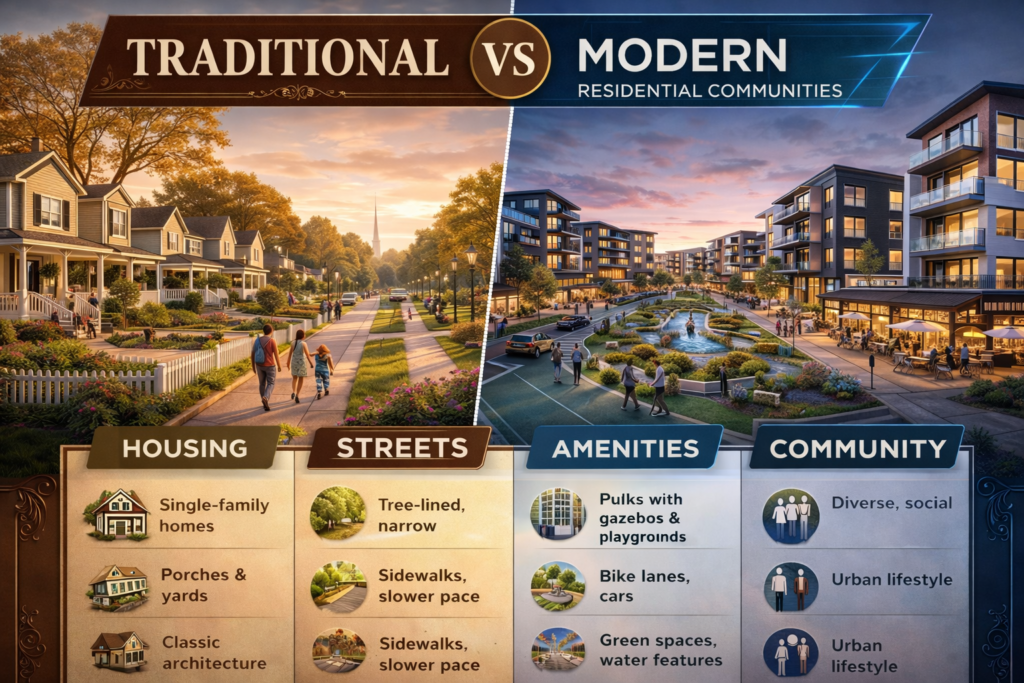
Traditional communities thrive on interpersonal relationships and collective living, while modern communities promote privacy and individual freedom.
Infrastructure and Amenities
Traditional areas rely on basic infrastructure, whereas modern communities offer integrated lifestyle amenities under one roof.
Design and Architecture
Traditional homes reflect cultural architecture, while modern residences focus on contemporary design, space optimization, and aesthetics.
Maintenance and Management
Maintenance in traditional communities is mostly self-managed, whereas modern communities offer professional upkeep and facility services.
Cost and Investment Value
Traditional homes are generally more affordable but may offer slower appreciation. Modern residential communities often command higher prices with better long-term investment potential.
Which Residential Community Is Right for You?
When choosing between Traditional vs Modern Residential Communities, consider:
- Your lifestyle preferences
- Family structure and future plans
- Budget and maintenance expectations
- Need for amenities and security
- Emotional vs convenience-driven living
There is no one-size-fits-all answer. The right choice depends on whether you seek cultural richness and close relationships or modern comfort and structured living.
Conclusion
The debate between Traditional vs Modern Residential Communities ultimately comes down to personal priorities. Traditional communities offer warmth, heritage, and social bonding, while modern residential developments provide luxury, convenience, and efficiency. By understanding these differences, you can make a well-informed decision that supports both your lifestyle and long-term happiness.
Frequently Asked Questions (FAQs)
A. Which type of residential area is better for families?
The best residential area for families depends on lifestyle needs. Neighborhoods with strong social bonding suit those who value relationships, while planned housing developments are ideal for families seeking safety, amenities, and convenience.
B. Are gated housing societies more secure than older neighborhoods?
Gated housing societies generally provide higher security through controlled access, CCTV monitoring, and professional guards, offering residents greater peace of mind.
C. Do planned housing projects offer better resale value?
Well-planned housing projects often attract higher resale and rental demand due to modern facilities, organized infrastructure, and better maintenance standards.
D. What are the maintenance responsibilities in older residential areas?
Homeowners in older residential areas typically manage repairs, utilities, and security on their own, which may require more personal effort and coordination.
E. Are lifestyle amenities necessary when choosing a home?
While not mandatory, lifestyle amenities such as parks, gyms, and community halls significantly improve comfort, recreation, and overall living quality.
F. Which housing option is more suitable for working professionals?
Residential developments located near business hubs and transport networks are often more suitable for working professionals who value time efficiency and easy access to daily necessities.
Pingback: Godrej Vrikshya Gurgaon – Nature-Inspired Luxury Homes